

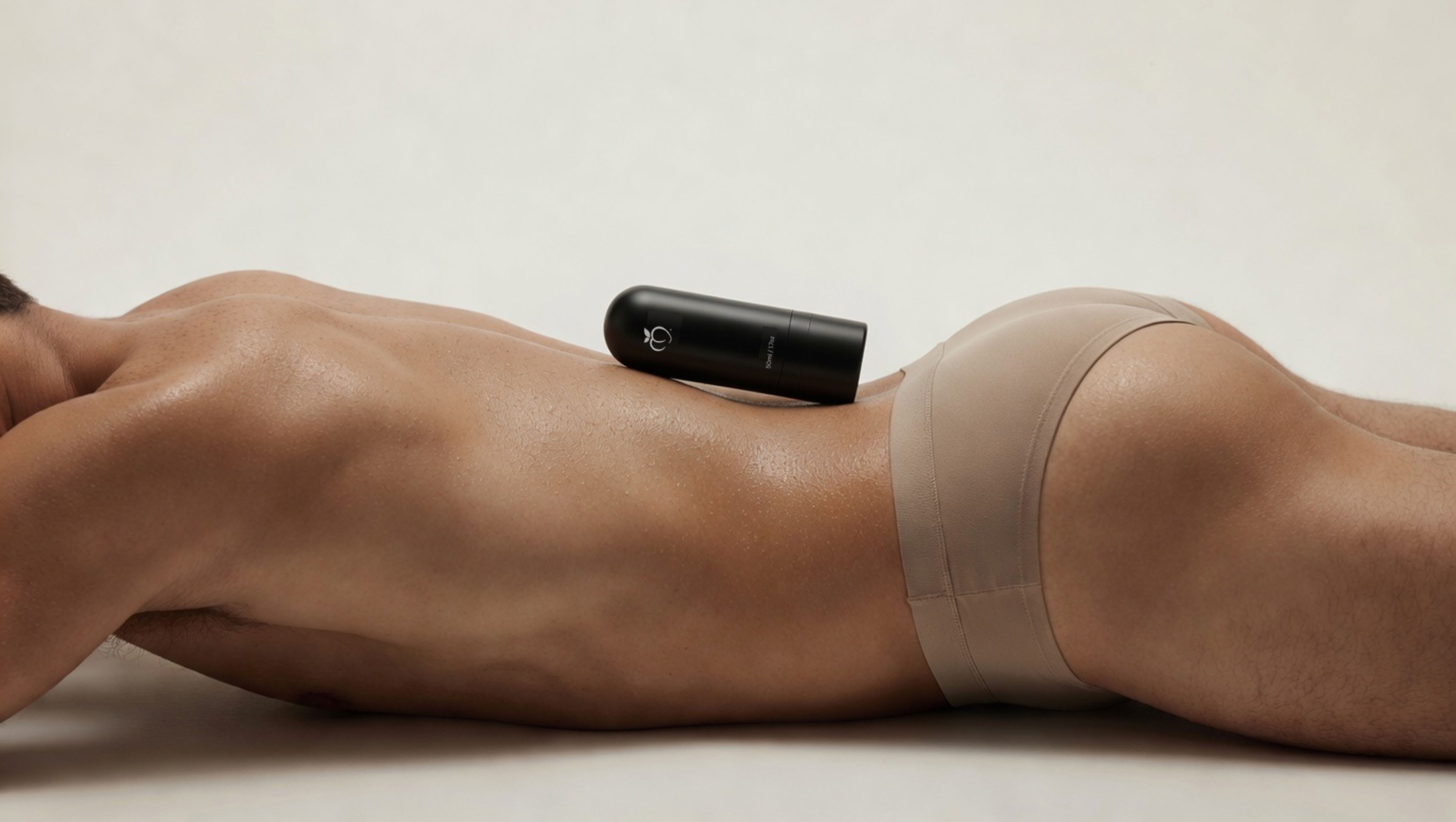
The Science of Slip (Why Your Lube Chemistry Dictates Your Pleasure)
We’ve talked about getting your mind right, prepping your body, and finding the perfect angles. But if there is one element that holds the entire experience of anal sex together—the absolute make-or-break variable—it’s the slip.
For decades, the gay community has treated lube as an afterthought. We grab whatever neon-colored bottle is on sale at the pharmacy, toss it in the nightstand, and hope for the best. But when you are engaging in high-level intimacy, trusting a cheap, chemical-filled gel is like putting discount gas in a Ferrari. The engine is going to sputter.
Welcome to Part 5 of "Your Guide to Bum Bliss." Today, we are putting on our stylish lab coats and diving deep into the science of slip. It is time to understand exactly what you are putting inside your body, and why upgrading your personal lubricant is the ultimate cheat code for bottoming.
The Anatomy of Absorption
To understand why lube chemistry matters, we have to look at the biology of the rectum. Unlike the vagina, the rectum does not produce its own natural lubrication. Proctology and clinical studies confirm that the rectal mucosa is highly absorptive, which is why chemical-heavy lubricants often cause post-sex irritation. Whatever you put in there directly interacts with your bloodstream and internal ecosystem.
Aha moment:
"Your rectum is not a slip-and-slide; it’s a highly absorbent sponge. What you put in there doesn't just sit on the surface—it becomes part of your body's ecosystem."
When you use a generic lube packed with unpronounceable preservatives, parabens, and synthetic chemicals, your body absorbs them. This is often the hidden culprit behind post-sex irritation, burning, and inflammation. You aren't "bad" at bottoming; your body is just rejecting bad chemistry.

The Problem With the Usual Suspects
Let’s break down the traditional options on the market and why they often fall short during gay sex:
Water-Based Lube (The Evaporator):
Great for condoms, but terrible for marathons. Because your body absorbs water, these lubes dry out and turn sticky incredibly fast. Even worse, many cheap water-based lubes contain glycerin (a sugar derivative) which feeds bacteria and can cause yeast imbalances.
Silicone-Based Lube (The Stainer):
Yes, it stays slick. But it is notoriously difficult to wash off your body (and your expensive sheets). It leaves a synthetic residue that feels more like you’ve been coated in plastic than enveloped in comfort.
Desensitizing/ Numbing Lubes (The Danger Zone):
We are going to say this loud and clear: never use numbing lubes for anal play. Pain is your body’s dashboard warning light. If you numb the area with benzocaine or lidocaine, you run the risk of sustaining serious internal injuries without even realizing it.
The Bumlicious Standard: Cushion Over Chafing
This brings us to the science behind Bumlicious. When we set out to create the perfect formula, we knew we had to reject the industry standard.
We are incredibly proud to say we are currently en route to achieving FDA 510(k) clearance, making us only the third oil-based personal lubricant in the USA to do so. On top of that, Bum Oil has officially passed rigorous third-party vaginal and rectal irritation tests with flying colors.
By using an oil base with all-natural, highly limited ingredients, we created a formula that respects your body’s ecosystem rather than disrupting it. Pair this clinically-backed peace of mind with our guide on [The Main Event] and you have a recipe for perfection.
Aha moment:
"A generic lubricant tries to eliminate friction, but a premium formula creates a cushion. Not all friction is bad—it creates sensation! But painful drag is about surviving the experience. Cushioning lets you sink into pure pleasure."
Because Bum Oil doesn't evaporate like water, it provides an ultra-long-lasting, healthy glide. It acts as a protective barrier, allowing for deep, sustained play without the jarring interruption of having to constantly reapply.
Upgrade your chemistry and respect your body's ecosystem. [Experience the FDA-pending, clinically tested cushion of Bum Oil today].
(Safety check: Oil degrades latex! Pair Bum Oil with polyurethane/non-latex condoms for STI protection. Using silicone toys? No problem—just give them a good scrub with warm soap and water immediately after play!).
FAQ: Anal Lube Chemistry
Can you use oil as anal lube?
Yes, high-quality, natural oils provide excellent cushioning and long-lasting glide for anal play. However, oil-based lubes cannot be used with latex condoms as they cause them to break.
Why does my lube get sticky during sex?
Water-based lubricants often turn sticky because the skin and mucous membranes absorb the water content, leaving behind the thicker ingredients (like glycerin) which create drag.
Are numbing lubes safe for bottoming?
No. Medical professionals strongly advise against desensitizing lubes because they mask pain, increasing the risk of tissue damage and micro-tears without the user realizing it.
Next Up in the Series... Part 6: The Glow Down. We are going to explore the lost art of aftercare. From physical recovery to the emotional comedown, we will show you how to wrap up the experience so you wake up the next morning feeling absolutely radiant. [Read Part 6 Here]